
Addicted to sickness
Time to throw away the hospital gown


Recently I heard the mythologist Martin Shaw being interviewed and one of the things he said was that many people are ‘addicted to disclosure’. And whilst disclosure in and of itself isn’t bad, we shouldn’t drown in it. We should offer it a place at the table alongside other sentiments, experiences, feelings and the like.
In my own words I might call it an addiction to being sick or pretending to be sick in order to fit in with a sick world. And then there’s the case of actually being made sick by the dynamics of sick institutions.
How many people get burnt out or suffer from chronic stress? Normal individuals who, once within the clutches of the system, must defend their power, claim knowledge as entirely their own, and hide their generosity in their overfull drawer.
Some people are addicted to their own busyness. If they don’t appear to be busy, pretend to be overloaded with work, or literally overwork themselves, they imagine they will not be seen.
Is it the individual or the system creating these dynamics? How do they feed each other? And how many people act with integrity and step out before they really do become sick? Of course, the options might be limited. People want a regular pay check. They want certainty and a stable job, even at the cost of chronic illness and stress. So one might say they have to stay. But do they? Escape is always possible, even in small acts of defiance. We’re not all cut out to lead the revolution.

When I was young I worked in the travel industry for around ten years. It was the 1980’s and 1990’s. The work options were limited for a working class girl with no degree, only a secondary school education. I grew up with the limitations of firstly being female, then mixed race at a time when everyone around me was English and white, with uneducated parents (a migrant father from China and an English mother, neither of whom finished secondary school), living on a council estate in one of the poorest areas of the country, with very few role models of working people in happy and successful careers.
That’s probably why I left. Looking back that’s probably the single most important decision I ever made. To leave England. Perhaps that was my first act of rebellion. To say no to a sick classist system and to those who perpetuate it. Those who maintain the system are not only those who benefit from it, but oddly enough, also those who are oppressed by it.
The rich will always find the ways to take advantage of any system. The dynamics of shame and pride collaborate to ensure the poor also have a hand in the perpetuation of oppressive dynamics. The attention given to monarchies and wealthy elites has always astonished me: it’s like slowly digging one’s own grave and laughing about it.
The big question is why?

Every year there are dramas in the social domain. This is the world I know best, having worked in the fields of overseas development and social welfare for almost thirty years. We read about abuse in the charity field. Abuse in youth care. Abuse in the church. Discrimination in the judicial field and in government and police and armed forces. Incompetence and negligence in social welfare institutions. Misconduct. Unprofessionalism. And the list goes on.
Whilst I would not go as far to say that this kind of stuff can be expected in the field of business; I would say that reading about yet another scandal in the social arena is unfortunately becoming less and less shocking. The moral compass seems to have disappeared, if there ever was one.
The human need for belonging to a group can push people to extremes. I have a friend who once admitted she was bullied by a Christian group of women. When another woman suddenly became the focus instead of her, she joined in with the bullying for fear of being isolated and excluded by the group. She knew it was wrong, but did it anyway.
Over the years I’ve met many civil servants and social workers who actually despise the group they are supposedly working for. Whilst outwardly they claim to want to help their clients; inwardly they are fuming with frustration, disappointment and intolerance. Instead of leaving their jobs, they stay. Haunting their clients, their colleagues and themselves. And the worse thing is: systems seem to reward these people the most.
I personally believe we need to pay more attention to the soul of an organisation, than to its economics. More attention to beauty than to power. More attention to wisdom than knowledge.
But of course, I cry in the wilderness. People don’t like those who point out flaws. We are supposed to be nice. We are supposed to fit in. We are supposed to concentrate on the positive. We are supposed to make everybody feel comfortable. We cannot offend or we are cast as the problem. Or we are silenced. However, at some point enough is enough.
I have been fired for whistleblowing – pointing out injustices in more than one supposed system of protection for refugees and trafficked minors. My PhD was delayed because of this. Academic leadership bowed to pressure and changed the goal posts just before I was due to defend my Phd. I have turned down contracts. Boycotted establishments. And called out injustice being committed against me, but primarily others. It gets tiring. So I also paint icons, record my dreams, meditate, spend as much time as possible in Brazil, and do things that bring joy.
Being mentally healthy is another act of rebellion in a sick world.
But we are always a stone’s throw away from another injustice. Behind systemic and institutional injustice are individuals. Individuals who choose. Yes choose to stay loyal to the system. Choose to stay loyal to their own longing for power or belonging, over the choice to do the right thing. Choose to turn a blind eye in order to keep a stable income.
Perhaps the problem is not so much the choice.
Perhaps the problem is the pretence.
Last night I asked a question to my dreams, as I often do.
I dreamt I was walking in a hospital with a small group of people, behind a woman who was dressed in a hospital gown. The woman in the gown was pretending to be sick so she could stay in a ward in the hospital. I was the only one who knew she was pretending. We were looking for a ward. We passed a ward but instead of turning into the ward, the woman forgot what her role was and she walked past the door of the ward. I called her back, reminding her, without words, that she needed to get on the ward. I reminded her that if she wanted to fit into the sick institution, she needed to keep up the pretence of being sick.
I haven’t worked as an employee of an organisation for over twenty years. I can’t pretend to be sick. I don’t need to fit in. My belonging is to a greater self who chooses not to betray or be betrayed.
This may sound a little dramatic. But I try to live a life guided by the precepts I received over 15 years ago. It’s not easy. It’s hard. It can be lonely. I make a lot of mistakes. It means embracing complexity, paradox and ambiguity. I have a few very good friends who are with me on the spiritual path. And other very good friends who don’t necessarily follow a recognisable spiritual path, but who are genuinely good souls.
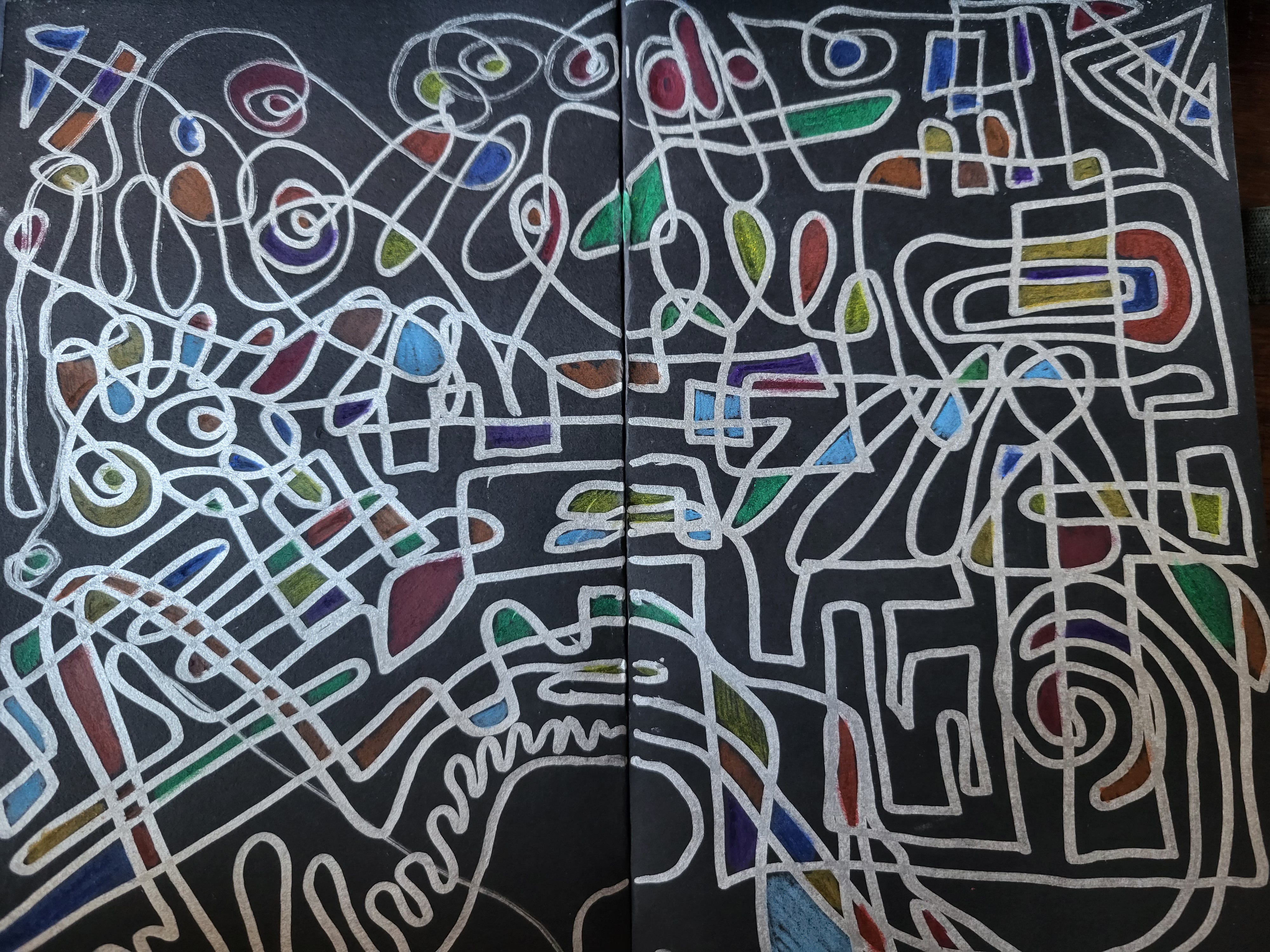
The pretence is real. Addiction to sickness is real. Desperation to fit in is real. And each one must decide for him/herself how far s/he is willing to compromise integrity for belonging.
Are you pretending to be sick in order to belong? What is your role in the perpetuation of (sick) systems? How do your spiritual or other practices respond to this crisis of pretence?